
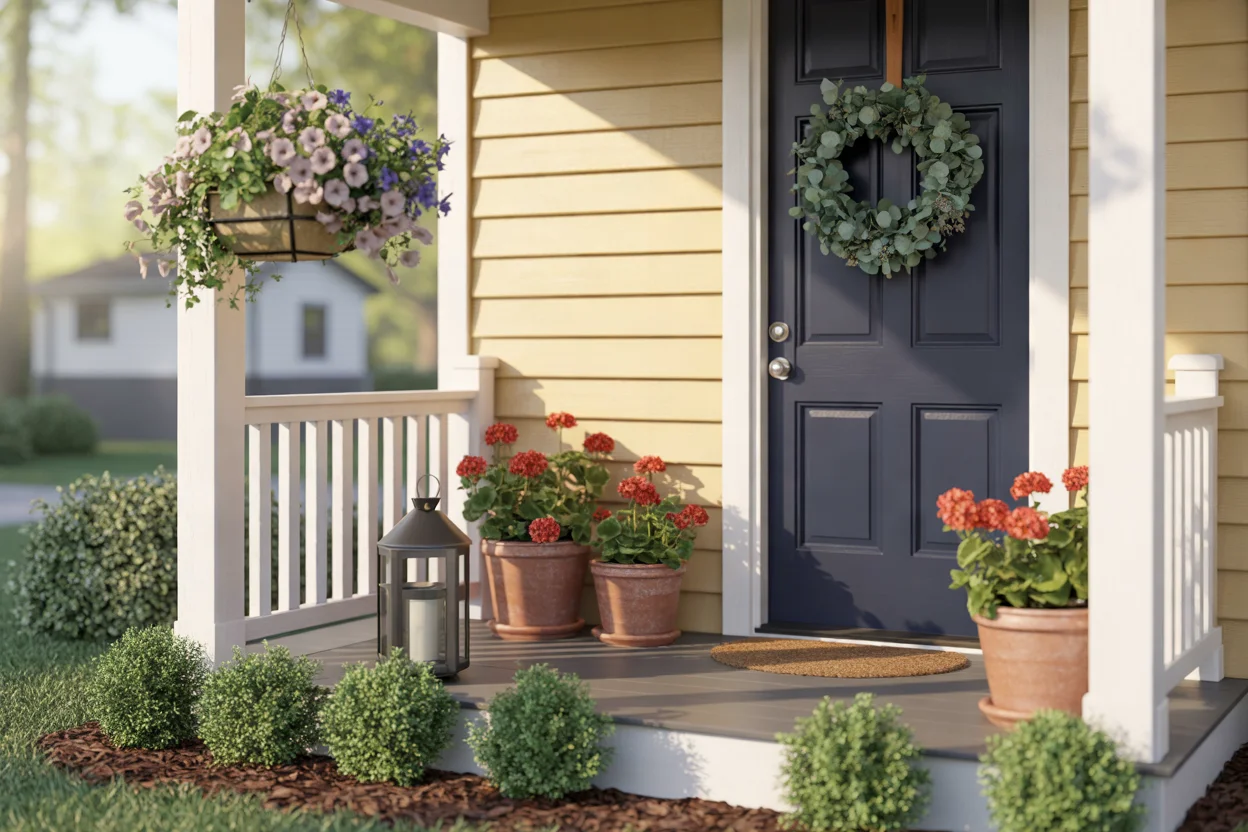

Improving your home’s exterior does not require a major renovation or an expensive decorating budget. These curb appeal small front porch ideas on a budget will help you create a welcoming entrance with simple updates, affordable materials, and thoughtful styling.
Whether you have a narrow porch, a tiny apartment entrance, or a compact front stoop, you can make the area feel more inviting without overcrowding it. From colorful potted plants and fresh door paint to charming lighting and space-saving decor, these ideas offer practical inspiration for every decorating style.
1. Add Colorful Potted Plants
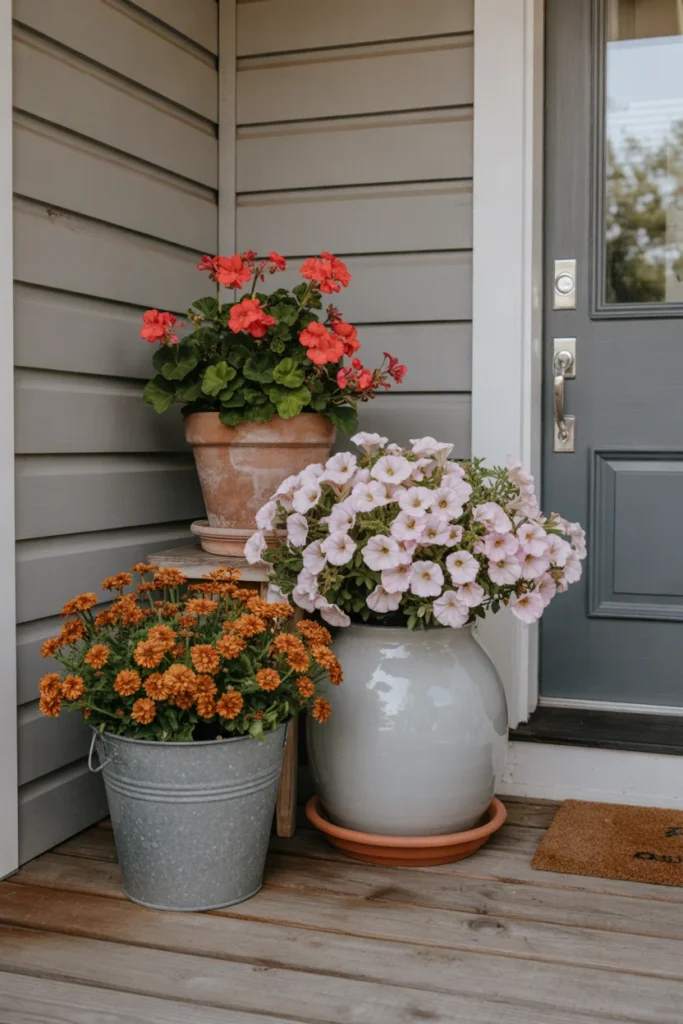
Colorful potted plants bring life, texture, and personality to a small front porch without requiring permanent changes. Place two or three containers beside the front door, combining different heights to create a layered arrangement. Terracotta pots, simple white planters, and charcoal containers all work beautifully with green foliage and seasonal flowers.
Choose blooms that complement your exterior, such as purple petunias against a white door or yellow marigolds beside a navy entrance. Ferns add softness to shaded corners, while sun-loving flowers brighten exposed porches. For a budget-friendly arrangement, reuse containers you already own and refresh them with outdoor paint. Make sure each pot has drainage holes, and leave the doorway clear enough for comfortable entry.
2. Refresh Your Front Door With Paint
Decor details:
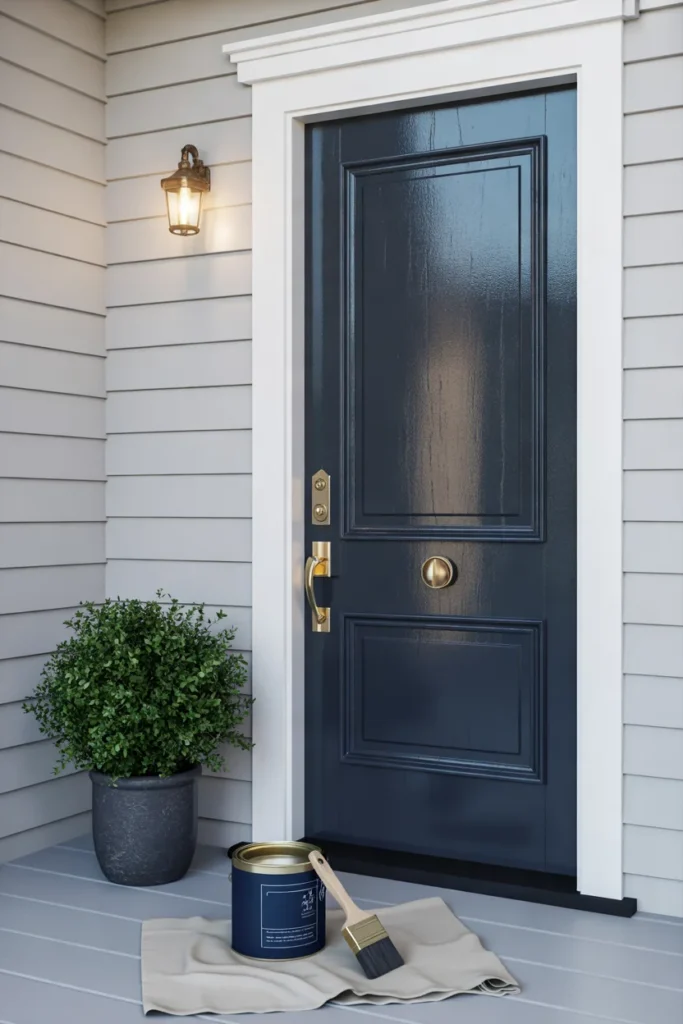
- Best colors: Deep navy, sage green, muted teal, warm red, or classic black.
- Materials: Exterior-rated primer and paint suited to your door’s material.
- Budget: Low, especially if you already have basic painting supplies.
- Difficulty: Beginner to intermediate, depending on the door’s condition.
- Styling tip: Coordinate the door color with your house numbers, porch light, or planter finish.
A freshly painted front door can become the main focal point of a modest entrance. For a cohesive look, repeat one accent color in a nearby flowerpot or doormat border rather than introducing several competing shades. Clean the surface, repair minor imperfections, and follow the paint manufacturer’s preparation and drying instructions. Check your lease or neighborhood rules before making permanent color changes.
3. Create a Welcoming Look With a New Doormat
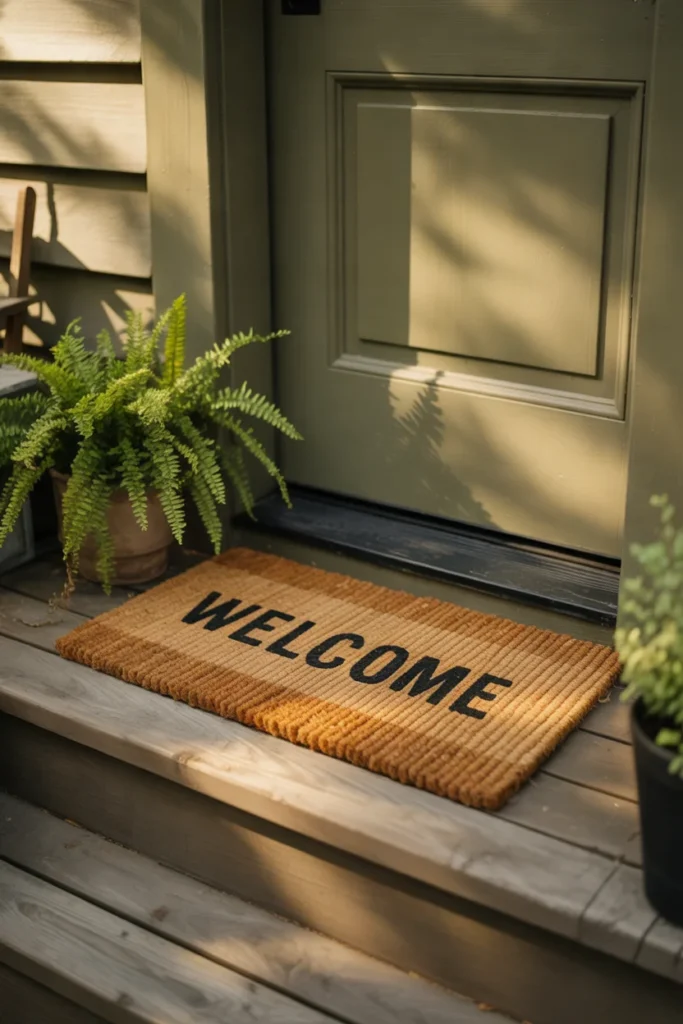
Quick Tip: Choose a doormat that fills roughly two-thirds to three-quarters of the usable doorway width without extending into the main walking path. A simple natural-fiber design, a black-and-white pattern, or a muted botanical print can complement many exterior styles. For extra depth, place a slightly larger, weather-resistant outdoor rug underneath.
The finished entrance feels intentional because the layered textiles visually connect the door, planters, and surrounding surfaces. Look for a mat with a nonslip backing and enough thickness to clear the bottom of the door. Shake out dirt regularly and let wet mats dry thoroughly to prevent trapped moisture, slippery surfaces, and mildew.
4. Hang a Simple Seasonal Wreath
BEFORE
A plain front door can look unfinished, especially when the surrounding porch has little decoration. Adding several unrelated accessories may create clutter without giving the entrance a clear focal point.
AFTER
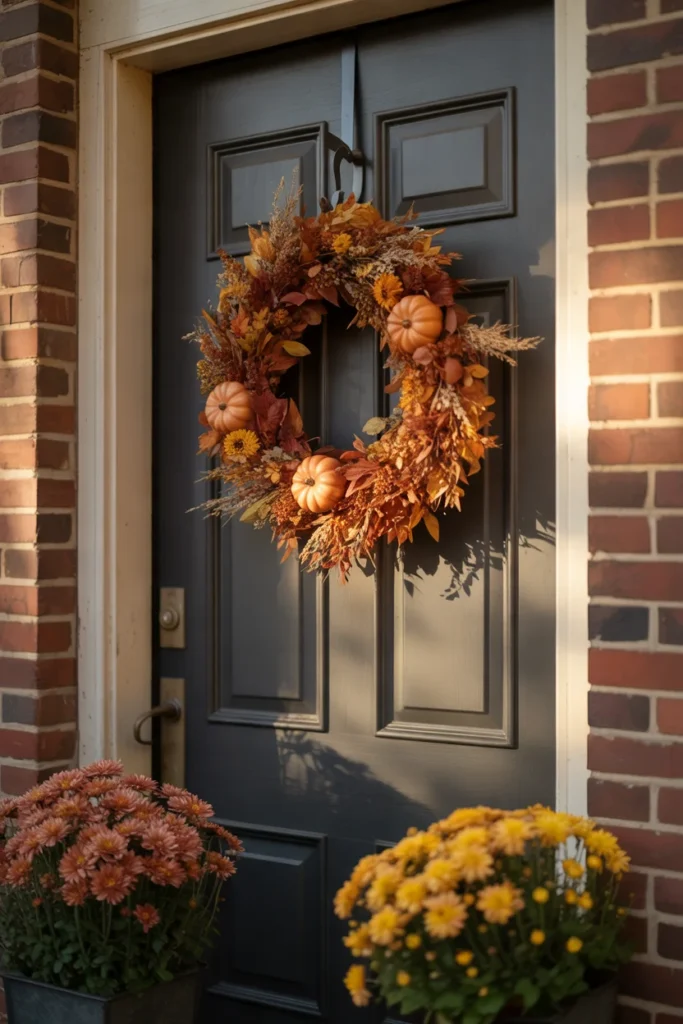
A single wreath introduces color and texture at eye level. A eucalyptus wreath feels understated and natural, while a small arrangement of dried flowers or seasonal greenery brings warmth to a traditional or farmhouse-style entrance.
Choose a wreath approximately 16 to 22 inches across, adjusting the size to suit your door. Hang it near the upper-middle portion of the door, leaving enough space around the handle and any glass panels. Use a suitable over-door hanger or removable mounting method approved for the door’s finish, and store delicate wreaths indoors when severe weather is expected.
5. Add Affordable Solar Pathway Lights
Step-by-step decorating:
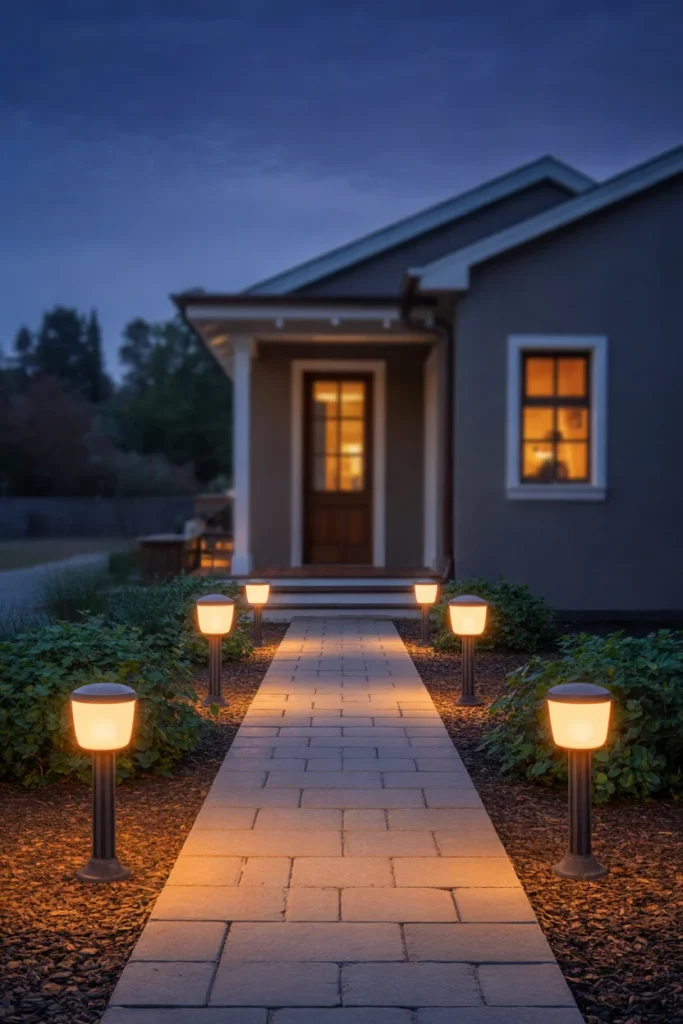
- Map the walkway. Identify dark spots near the steps, path, or entrance where additional illumination would be useful.
- Choose the lights. Select outdoor-rated solar stakes with a warm-white glow for a welcoming appearance.
- Space them evenly. Follow the manufacturer’s spacing recommendations, keeping the lights outside the main walking route.
- Check sunlight exposure. Place the solar panels where they receive sufficient direct sunlight during the day.
- Test the result. After dark, check whether the steps and edges of the path are visible without creating glare.
Solar lighting is particularly useful for homeowners who want to improve their entrance without running new electrical wiring. The initial cost can remain low with a small set of lights, and installation is usually straightforward. Keep panels clean, trim back foliage that blocks sunlight, and remember that decorative pathway lights may not provide enough illumination for every safety need.
6. Use Matching Planters for a Balanced Look
| Feature | Matching Planters | Mixed Planters |
| Visual effect | Symmetrical and orderly | Relaxed and collected |
| Best placement | On both sides of a door | Along one edge or corner |
| Color approach | Repeat one finish | Mix complementary finishes |
| Budget strategy | Buy two simple containers | Reuse pots already available |
| Styling needs | Similar plants maintain balance | Varied heights create interest |
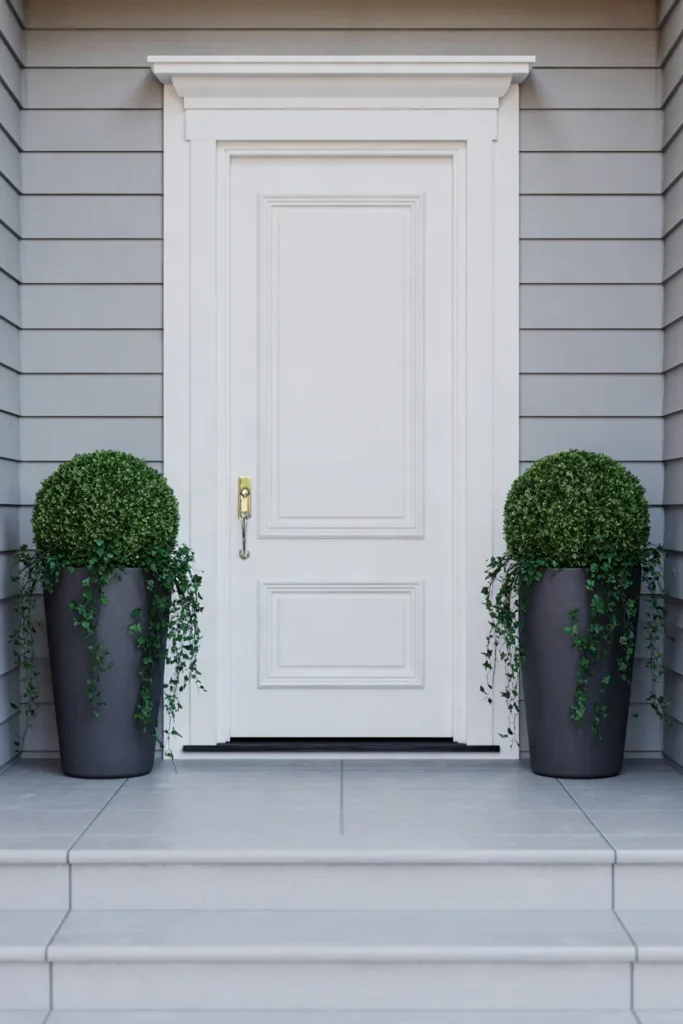
Matching planters can make a compact entrance feel organized, especially when the front door sits centrally between two narrow walls. Choose containers that are proportional to the doorway rather than oversized urns that compete with it. Mixed planters offer more flexibility if you already have different pots. Whichever style you choose, repeat a color or material to create a visual connection.
7. Decorate With a Small Outdoor Rug
DO:
- Choose a flatwoven outdoor rug that fits the porch’s usable floor area.
- Repeat a color from the front door, flowers, or exterior trim.
- Select a material designed to handle outdoor moisture and sunlight.
- Leave enough uncovered flooring for easy access and cleaning.
DON’T:
- Cover the entire porch with a rug that reaches the steps.
- Place a rug where the door scrapes against it.
- Use a slippery indoor rug in an exposed outdoor area.
- Allow water to remain trapped underneath for long periods.
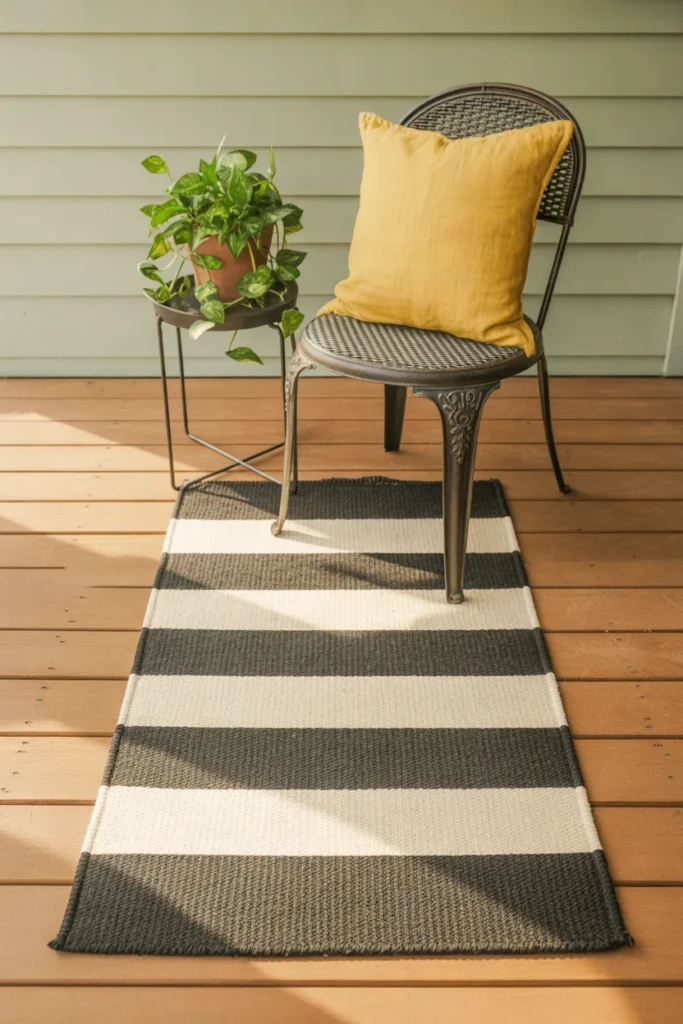
A compact rug defines the entrance as a separate visual zone and softens hard surfaces such as concrete, brick, or tile. Stripes can visually lengthen a narrow porch, while a subtle geometric pattern adds interest without overwhelming the doorway. Secure the rug appropriately and lift it periodically to clean beneath it and allow the floor to dry.
8. Add a DIY Wooden Porch Sign
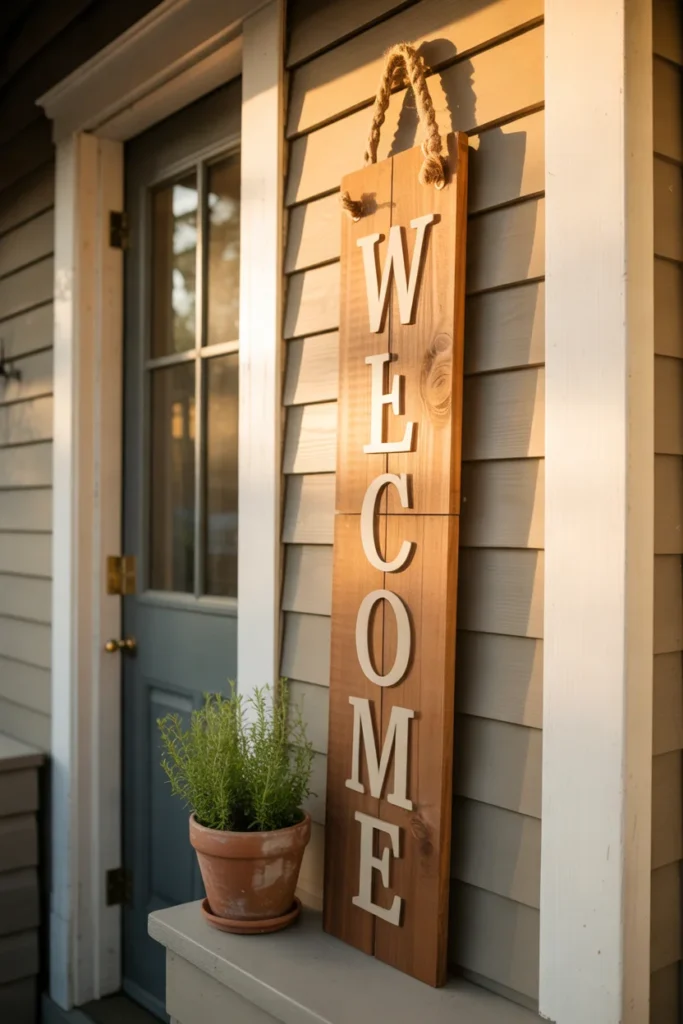
Quick Facts
- Materials: Reclaimed wood, exterior paint, brushes, and a suitable outdoor sealant.
- Budget: Low if you can reuse a board or leftover timber.
- DIY difficulty: Beginner.
- Best placement: Against a sheltered wall beside the entrance.
- Style: Farmhouse, rustic, cottage, or casual traditional.
A wooden sign with a short greeting, house name, or simple botanical motif adds a personal touch without taking up much floor space. Sand the board, remove loose debris, and use paint and protective finishes appropriate for outdoor exposure. Keep the lettering large enough to read from the walkway. If the porch is narrow, mount the sign securely on the wall rather than leaning it where someone could knock it over.
9. Upgrade Your House Numbers
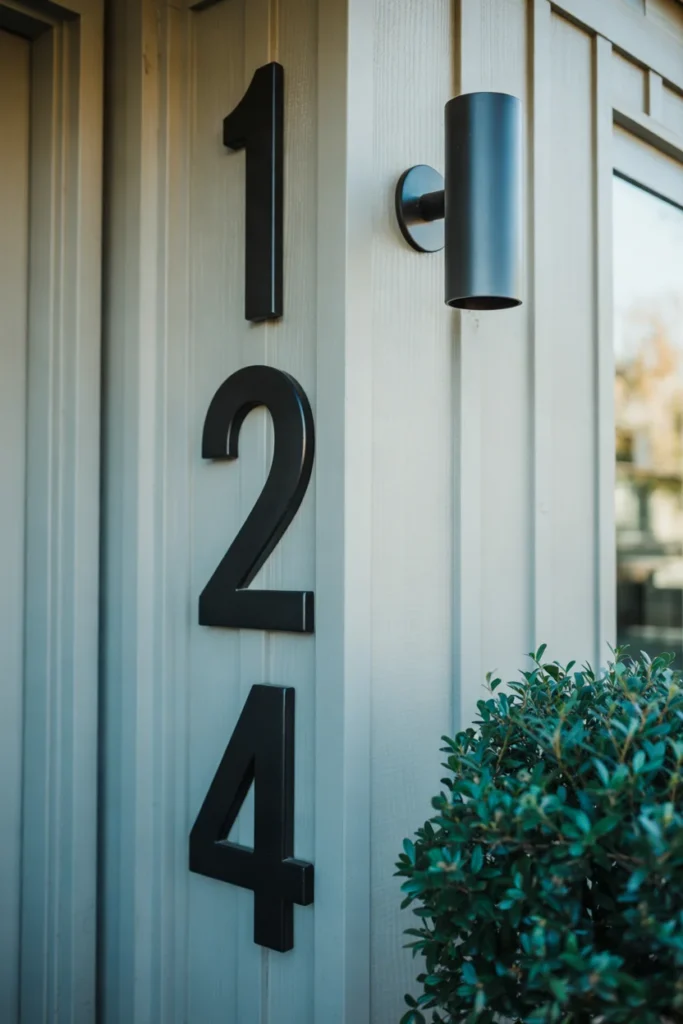
Clear, attractive house numbers make an entrance easier to identify while adding a polished design detail. Replace faded numerals with a finish that complements your door hardware, such as matte black on a pale exterior or brushed metal against darker siding.
For a modern home, choose clean-lined numerals with generous spacing. Traditional homes often suit classic metal or serif styles. Mount the numbers on a contrasting section of wall, a door-side trim board, or another visible surface near the entrance. Before drilling, check for wiring and confirm that the mounting surface can support the hardware. Renters can consider removable number plaques where permitted. Prioritize visibility from the street rather than choosing a design that disappears into the background.
10. Install Budget-Friendly Wall Sconces
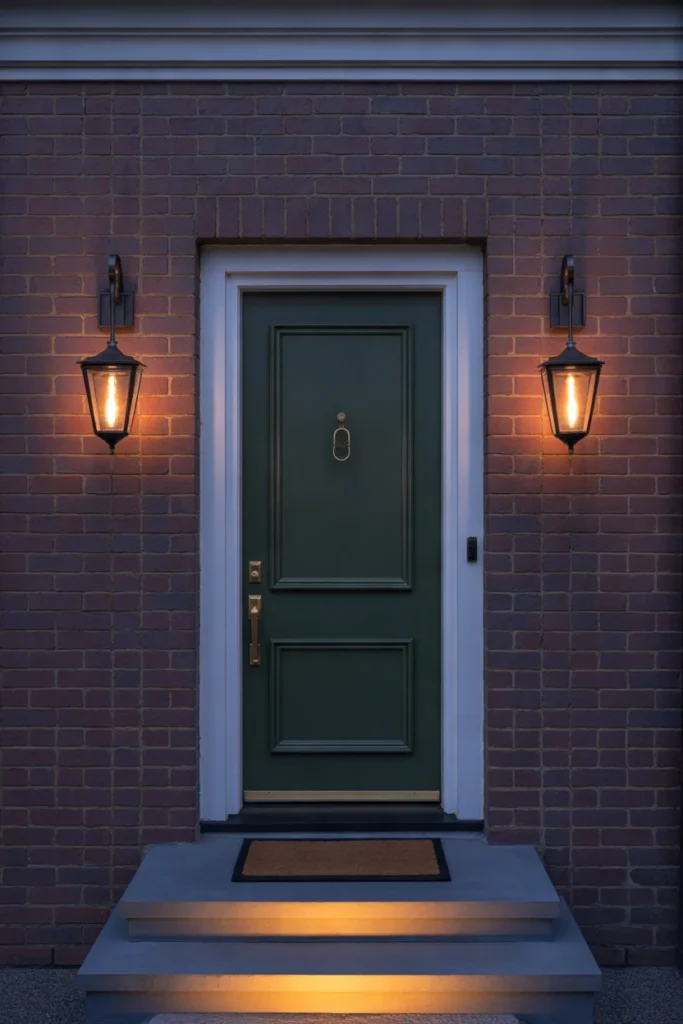
Quick Tip: Match the scale of the light fixture to the doorway and surrounding wall. A compact, downward-facing sconce usually looks more balanced beside a narrow door than a large decorative lantern. Choose an outdoor-rated fixture with a finish that coordinates with the house numbers and door hardware.
A wall sconce provides useful evening illumination while giving the entrance a more finished appearance. Warm light can complement brick, wood, and neutral siding without making the area feel harsh. If a suitable light is already installed, replacing the fixture’s exterior finish or updating the bulb may be more affordable than adding another light. New hardwired fixtures should be installed by a qualified electrician, and any lighting changes in a rental should be approved by the property owner.
11. Add Hanging Flower Baskets
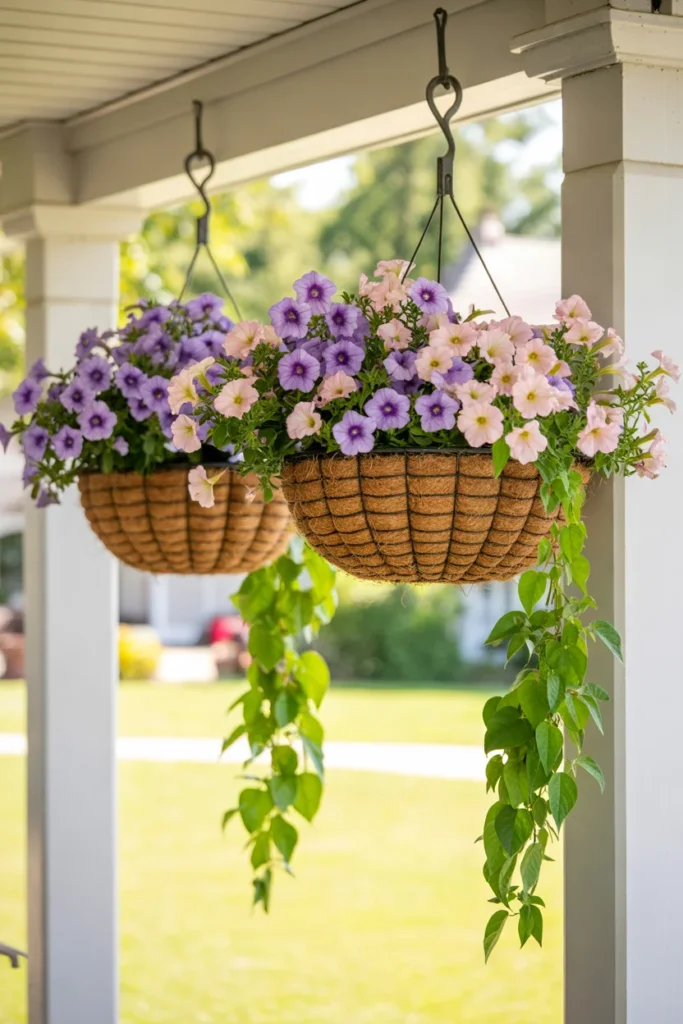
BEFORE
A small porch with limited floor space may not have enough room for several large containers. Adding more pots around the entrance can restrict movement and make the doorway feel crowded.
AFTER
One or two hanging baskets draw attention upward and introduce flowers without occupying the walking area. Trailing petunias, lobelia, or suitable cascading foliage create movement around a sheltered porch, especially when paired with a simple door wreath.
Choose lightweight baskets with secure, appropriately rated supports. Check the mature plant size and watering requirements before buying, and avoid placing baskets where they obstruct the door, strike visitors, or drip onto a walking surface. Hanging baskets dry out faster than many ground-level pots, so check soil moisture regularly during hot weather.
12. Refresh Old Porch Railings With Paint
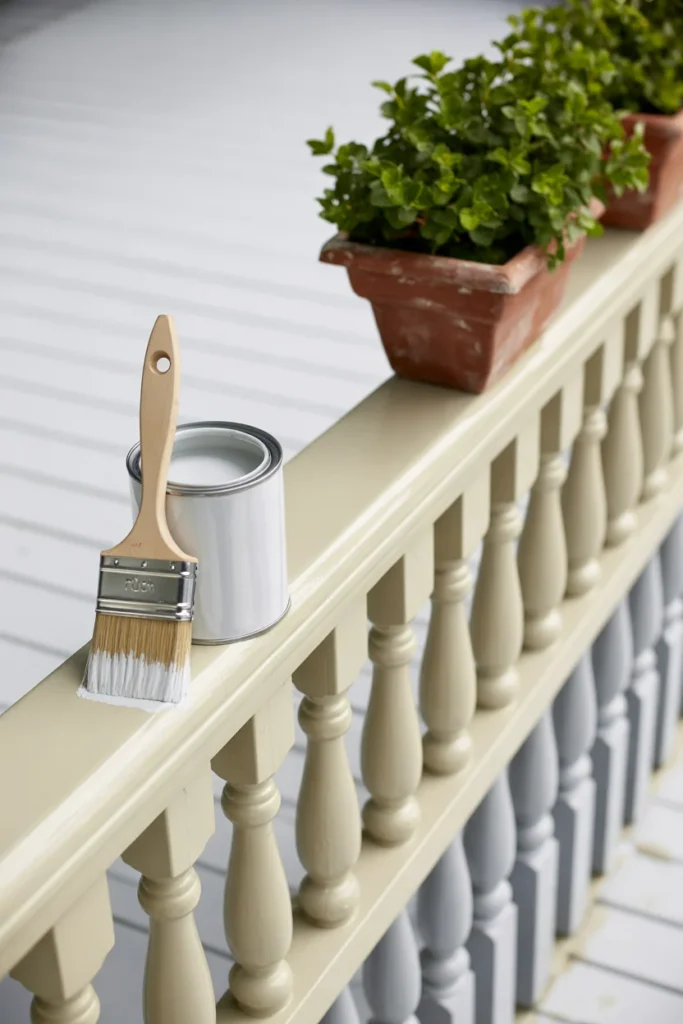
Step-by-step decorating:
- Inspect the railings. Look for loose joints, rust, peeling paint, splintering wood, or other damage that needs attention before decorating.
- Clean the surface. Remove dirt, cobwebs, and loose material using a method suitable for the railing material.
- Prepare the finish. Sand or prime only as appropriate for the existing coating and material, following product safety instructions.
- Apply the right paint. Use a compatible exterior product for wood or metal, allowing the recommended drying time.
- Finish the details. Clean nearby steps and coordinate the railing color with the door, trim, or house numbers.
Fresh railings can make an older entrance look maintained without the cost of replacing the entire structure. White creates a traditional contrast against darker siding, while black offers a sharper, more contemporary appearance. If the railings are loose, corroded, or structurally damaged, repair them before painting. Older coatings may contain hazardous materials, so avoid dry sanding or scraping suspect paint without appropriate testing and precautions.
13. Style a Small Porch Chair
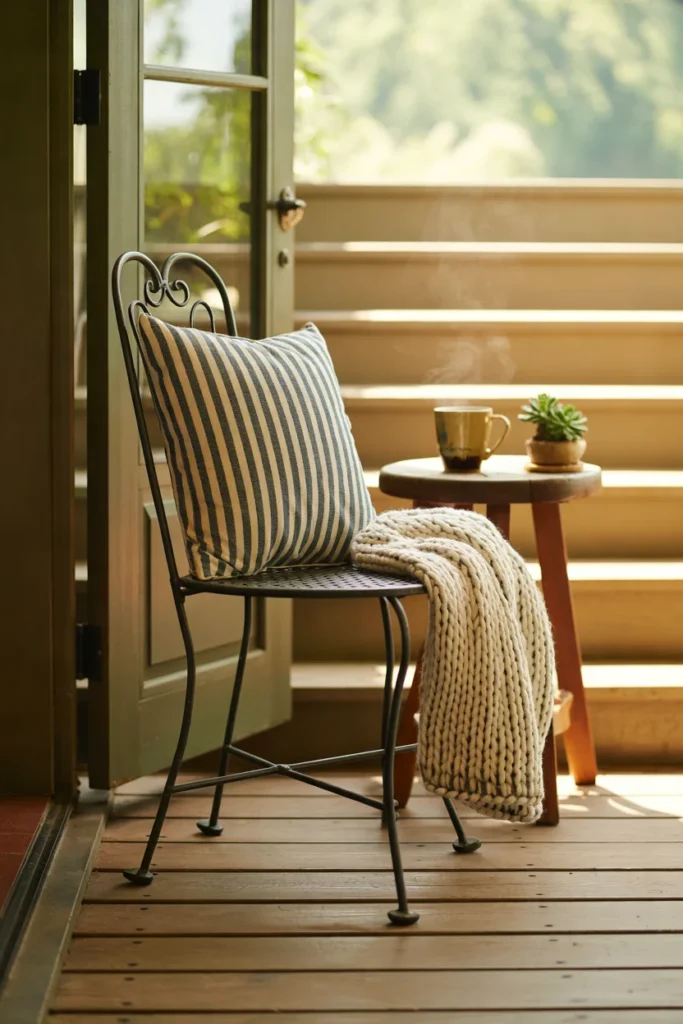
A single compact chair can make a front porch feel more welcoming without requiring a full outdoor seating set. Choose a folding chair, a slim wooden design, or a small metal bistro chair that suits the available floor area. A neutral seat paired with a striped cushion or one patterned outdoor pillow creates interest without adding bulk.
Position the chair against a wall or in an unused corner, keeping the route to the door and steps unobstructed. For a narrow porch, a chair with a visually open frame often feels lighter than a deep, upholstered-style outdoor seat. Use weather-resistant materials, bring cushions indoors during rain, and avoid placing furniture where it can tip or block a handrail.
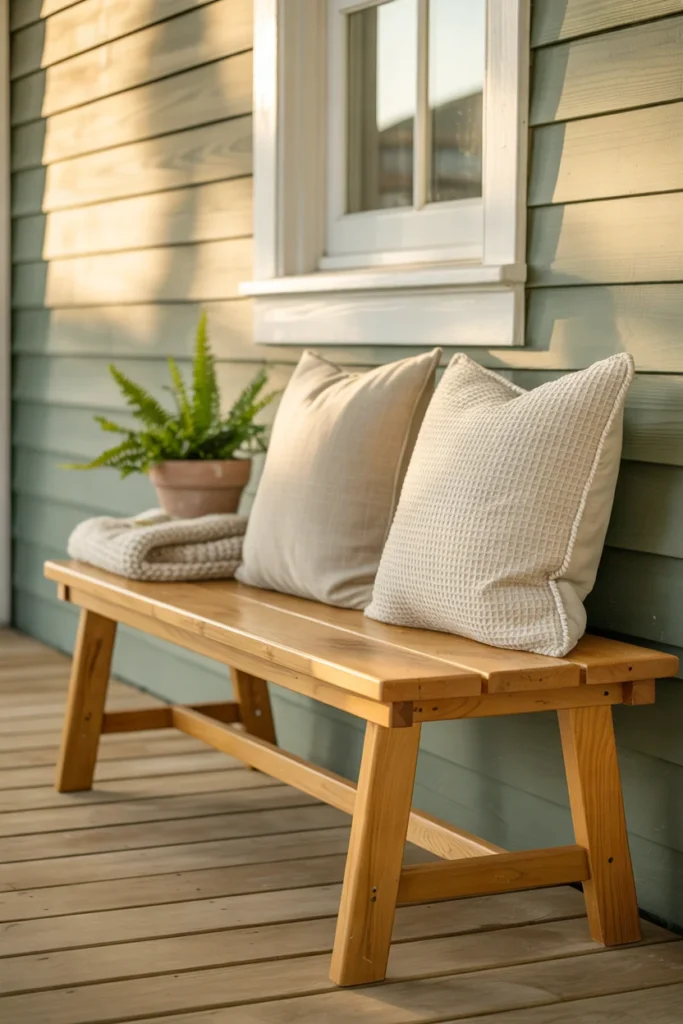
14. Add a Compact Outdoor Bench
Decor comparison
| Feature | Backless Bench | Bench With Back |
| Appearance | Light and simple | More substantial |
| Space needs | Usually easier to tuck away | Requires more depth |
| Comfort | Suitable for brief seating | Better support for longer sitting |
| Storage potential | Some models include hidden storage | Storage depends on the design |
| Best setting | Narrow porch or small stoop | Wider porch with a sheltered wall |
A small bench provides a place to sit while taking off shoes or setting down a bag, provided the entrance has enough room. Measure the available depth and check the door swing before choosing a model. A weather-resistant wood or metal finish can complement existing railings and planters. Keep the bench stable on level ground, and avoid using a storage model if its lid would interfere with the doorway or walking route.
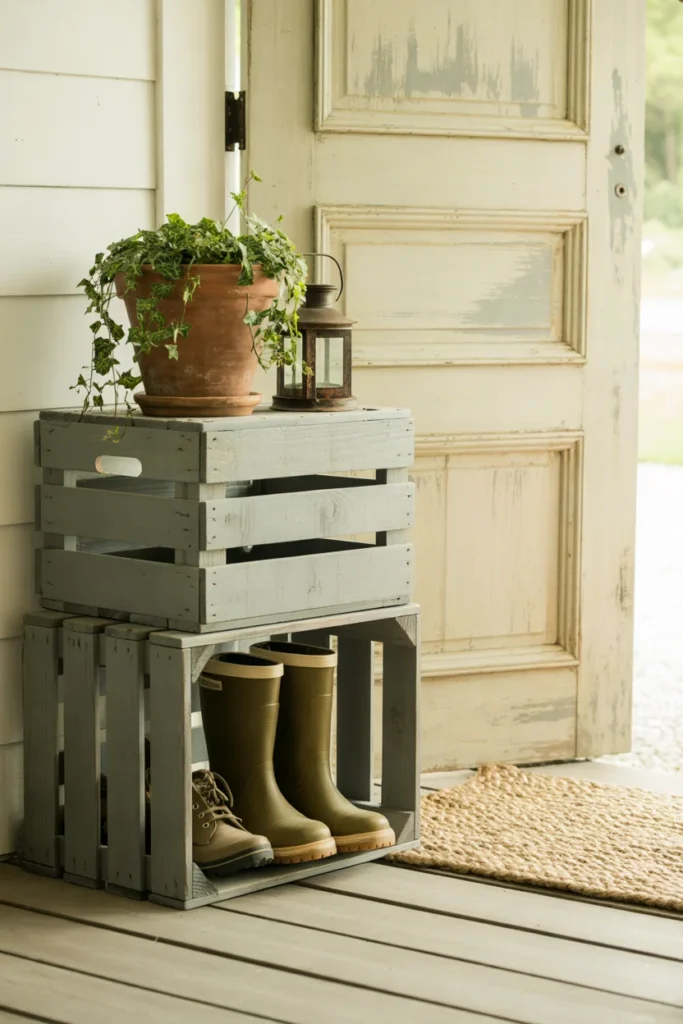
15. Decorate With a Repurposed Wooden Crate
DO:
- Choose a sturdy crate with no loose boards or protruding nails.
- Sand rough edges before using it near the entrance.
- Apply an appropriate outdoor finish if the crate will be exposed to moisture.
- Use the crate to display a small plant or hold lightweight outdoor accessories.
DON’T:
- Stack unstable crates where they could fall.
- Place untreated wood directly on wet concrete for long periods.
- Fill the crate with heavy objects that make it difficult to move safely.
- Allow stored items to spill into the doorway.
A reclaimed crate introduces rustic texture and makes use of materials that might otherwise go unused. Place one beside a sheltered wall and top it with a small potted plant, or use a sturdy low crate to organize a few lightweight gardening supplies. Keep the arrangement simple so it reads as intentional decor rather than general storage. Inspect the wood occasionally for splinters, moisture damage, and insects.
16. Use Vertical Planters to Save Space
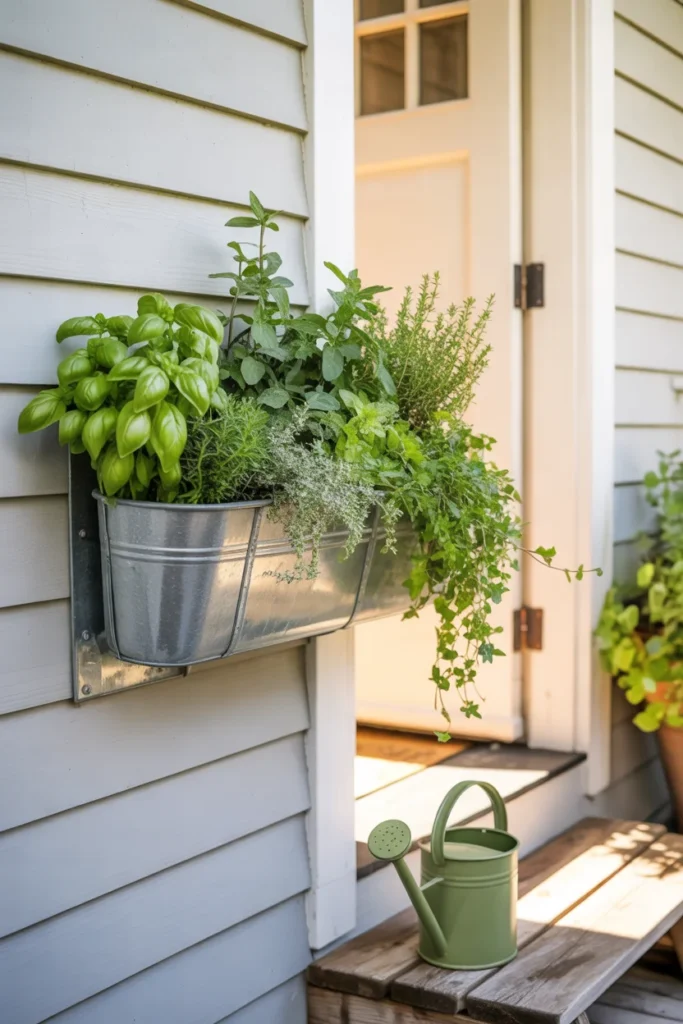
Quick Facts
- Best location: A suitable wall beside the entrance or a stable freestanding vertical planter.
- Space needed: A narrow footprint with enough clearance for plant growth and maintenance.
- Plant choices: Compact herbs, trailing foliage, or small flowering varieties suited to local conditions.
- Budget level: Low to moderate, depending on whether you build or buy the planter.
- Maintenance: Regular watering, drainage checks, and occasional pruning.
Vertical planting allows you to enjoy greenery without filling every available floor area with pots. A slim wall-mounted planter can hold several small plants, while a tiered stand provides flexibility for renters who cannot drill into exterior walls. Use a secure mounting system appropriate for the combined weight of the planter, soil, and water. Arrange plants according to their light requirements, and make sure drainage does not stain siding or create slippery patches below.
17. Add Window Boxes With Flowers
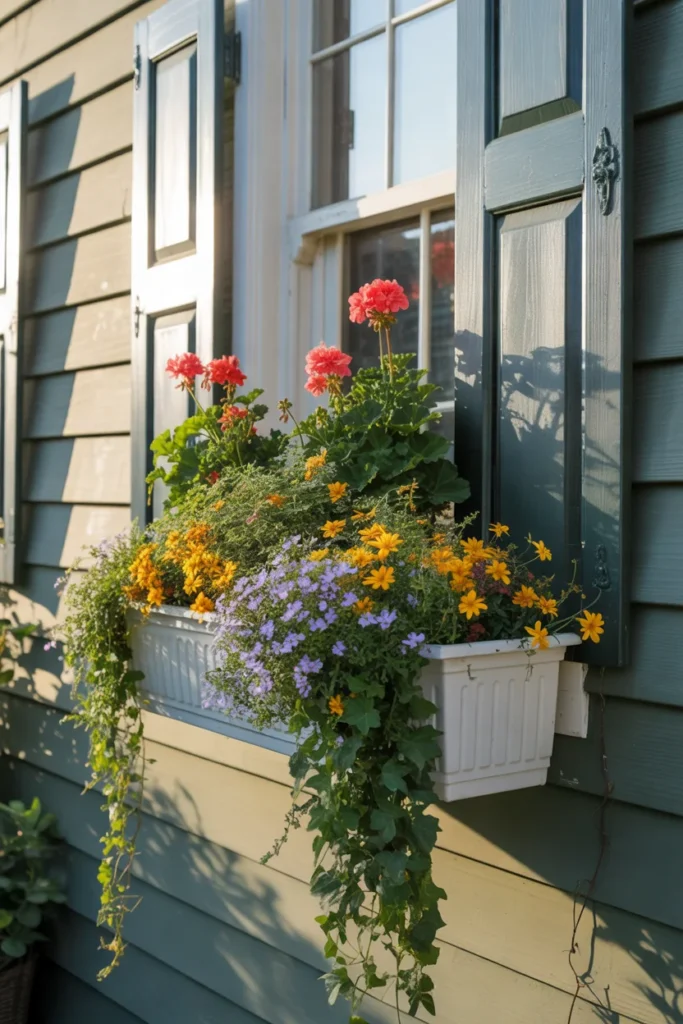
Window boxes add color beneath a front-facing window and help connect the porch decor with the rest of the exterior. A simple black box suits modern trim, while natural wood or painted white works well with cottage-style homes. Combine upright flowers with trailing plants to create a layered look that remains visible from the street.
Measure the window width before purchasing a box, and choose one that fits the window’s proportions rather than extending too far beyond the trim. Use appropriate brackets, secure the box according to the manufacturer’s instructions, and account for the considerable weight of wet soil. Renters should obtain permission before drilling into exterior walls. Water regularly and remove spent flowers to keep the display tidy.
18. Clean and Refresh the Front Steps
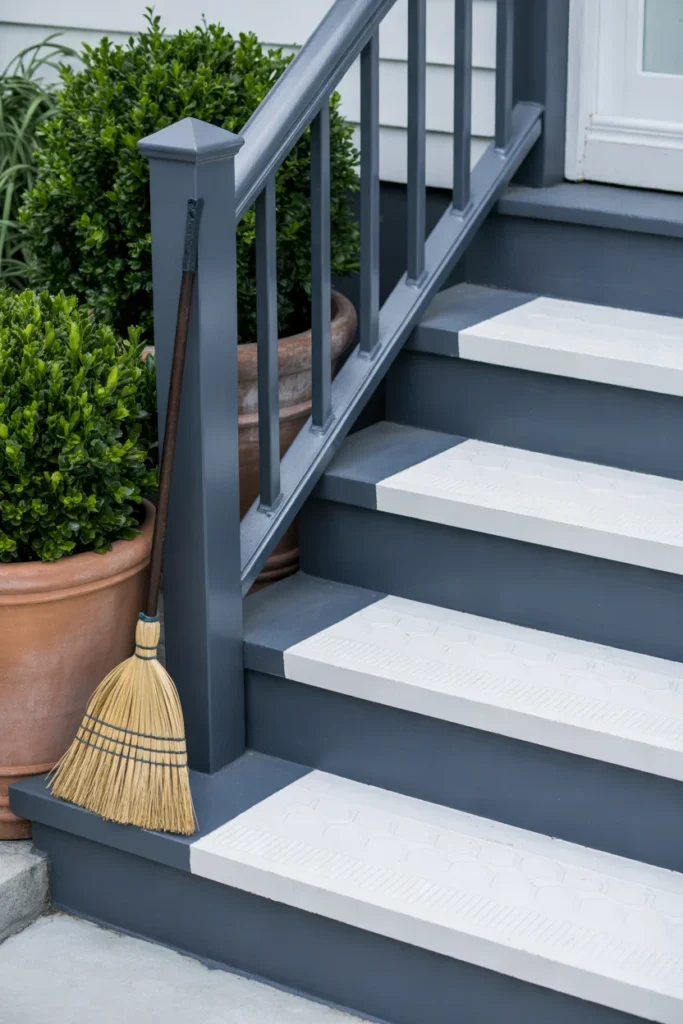
BEFORE
Dust, fallen leaves, muddy footprints, and dark stains can make a front entrance look neglected even when the door and surrounding decor are attractive. Adding new accessories will not address these underlying issues.
AFTER
Clean steps, clear edges, and a swept landing create a brighter, more orderly entrance. Removing debris also makes existing details, such as brickwork, painted railings, and a decorative doormat, easier to notice.
Start with a broom and a suitable cleaning solution for the step material. Use pressure washing only when the surface and mortar can safely tolerate it. Check for loose tiles, uneven concrete, damaged nosings, and slippery areas, addressing repairs before adding decoration. A quick weekly sweep and prompt removal of leaves or mud can help the entrance stay presentable between deeper cleanings.
19. Create a Charming Look With Lanterns
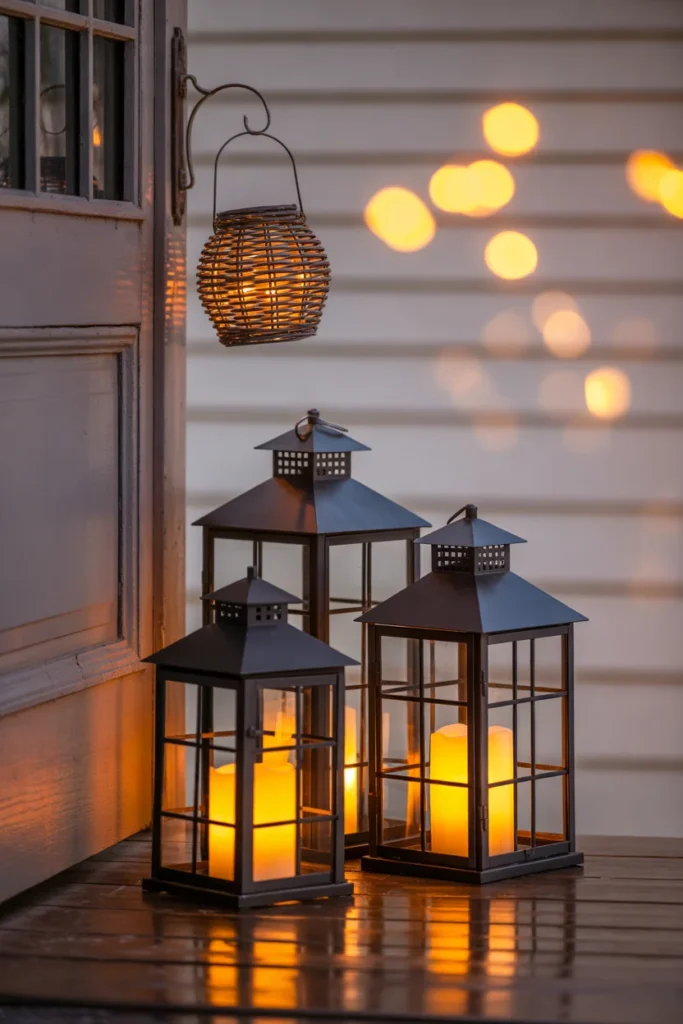
Step-by-step decorating:
- Select a lantern style. Choose a simple black metal design, a natural woven-look lantern, or a classic glass-sided version.
- Check the proportions. A compact lantern should complement nearby planters rather than compete with the door.
- Choose the light source. Battery-operated LED candles offer a convenient decorative glow without an open flame.
- Arrange thoughtfully. Place one lantern beside a larger planter or group two different heights in a sheltered corner.
- Maintain the finish. Wipe away dust and check batteries or weather damage regularly.
Lanterns create a warm evening atmosphere without the expense of installing additional lighting. They are especially useful on a covered porch, where decorative pieces receive some protection from rain. If the entrance is very narrow, one lantern is usually enough. Choose stable, weather-appropriate models and avoid real candles near dry plants, fabric, wooden decor, or other combustible materials.
20. Add a DIY Flower Bed Along the Porch
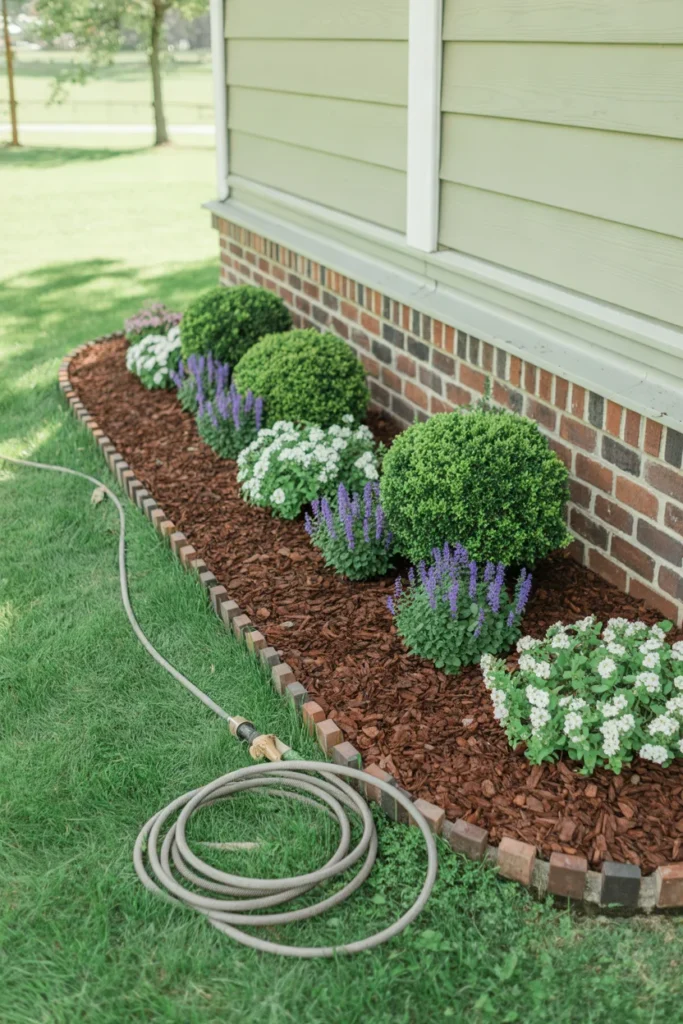
DO:
- Outline a narrow planting bed that follows the porch edge without covering the walkway.
- Choose plants suited to the area’s sunlight, climate, and available soil.
- Repeat a small selection of flower colors for a more coordinated appearance.
- Add compost and mulch appropriate for the chosen plants.
DON’T:
- Dig near utility lines without checking their locations first.
- Plant mature shrubs that will eventually block windows or paths.
- Allow soil or mulch to cover siding, vents, or the bottom of wooden trim.
- Choose plants that require more watering and pruning than you can maintain.
A small flower bed can soften the transition between the porch and the yard. For a tidy arrangement, place shorter flowers near the front and slightly taller plants toward the house, keeping mature sizes in mind. A simple mix of white blooms and green foliage works with many exterior colors, while a few bright flowers can echo the front door. Use locally suitable plants and leave enough clearance for drainage and foundation maintenance.
21. Use Gravel or Mulch for a Neat Entrance
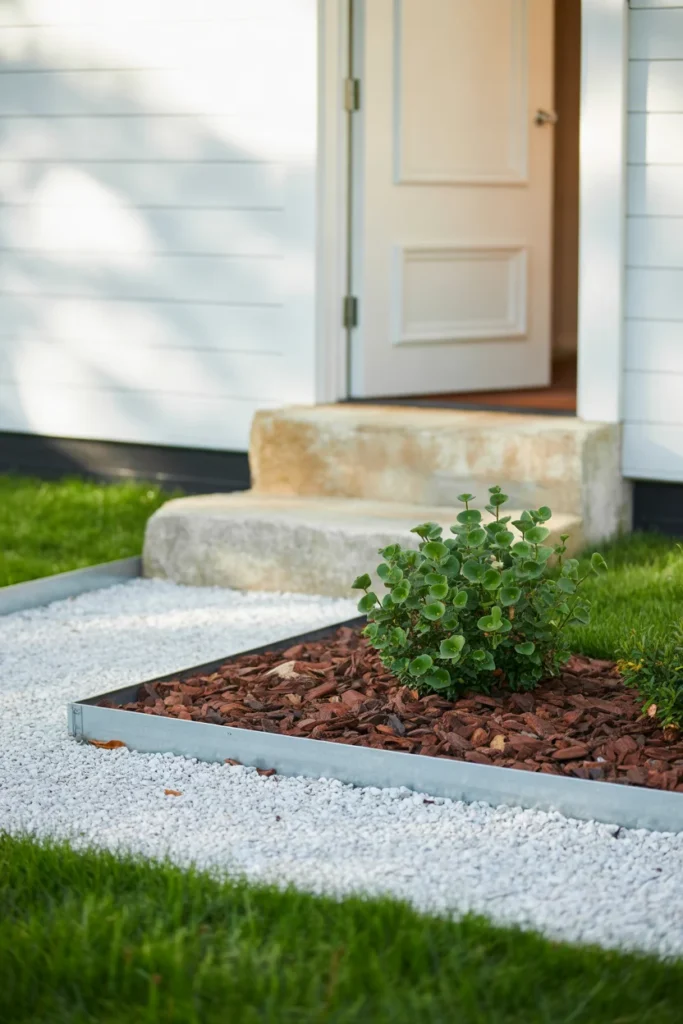
Quick Tip: Choose a ground-cover material that suits the existing landscape and the way water moves around your home. Mulch gives planting beds a softer, natural finish, while gravel creates a crisp border beside a path or porch. Install edging where necessary to keep the material from spreading onto steps and walkways.
A defined strip of mulch or decorative gravel can make the area beside a small front porch look more deliberate. Dark mulch provides contrast against light siding, while pale gravel can complement brick and neutral stone. Prepare the ground by removing weeds and leveling the area appropriately. Keep material away from siding, vents, and drainage outlets, and avoid directing runoff toward the foundation.
22. Decorate With Affordable Outdoor Pillows
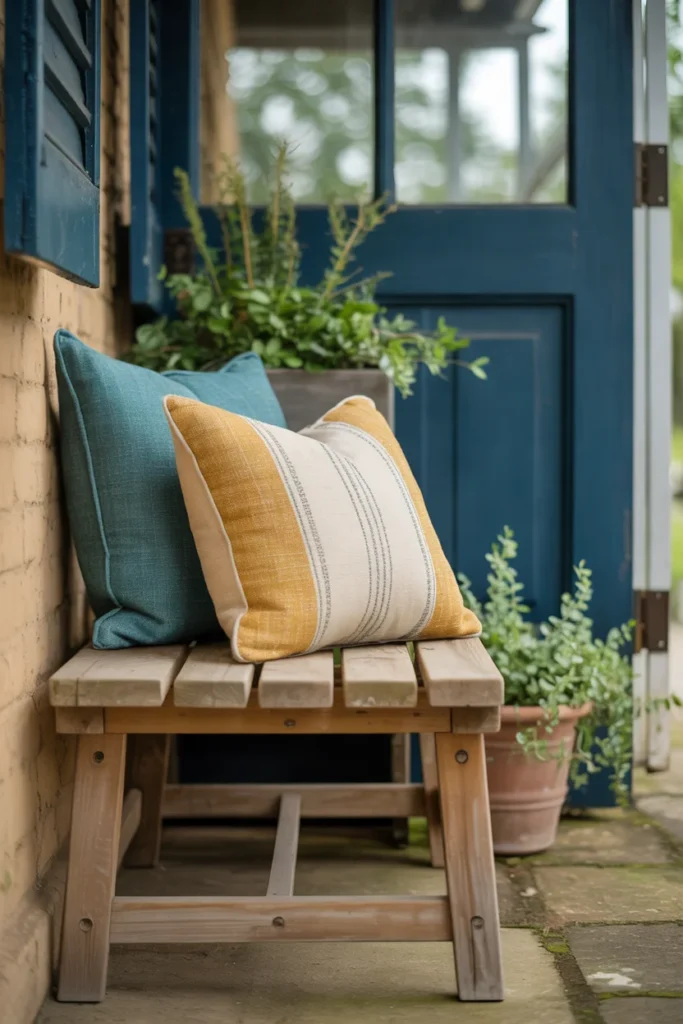
Decor details:
- Best furniture: A porch chair or bench with a dry, sheltered seating area.
- Color palette: Two coordinated shades, such as cream and olive or navy and soft blue.
- Patterns: Stripes, small botanical prints, or subtle geometric designs.
- Materials: Outdoor-rated fabric with suitable resistance to fading and moisture.
- Budget tip: Replace one or two pillow covers instead of buying entirely new cushions.
Outdoor pillows add softness to wood, metal, and woven furniture without taking up additional floor space. Choose one patterned cover and one solid color to avoid a crowded appearance on a compact seat. A cushion in a shade that echoes the front door can connect the seating area to the rest of the entrance. Store pillows indoors during heavy rain, clean them according to their care labels, and make sure they dry fully before reuse.
23. Add a Simple Trellis With Climbing Plants
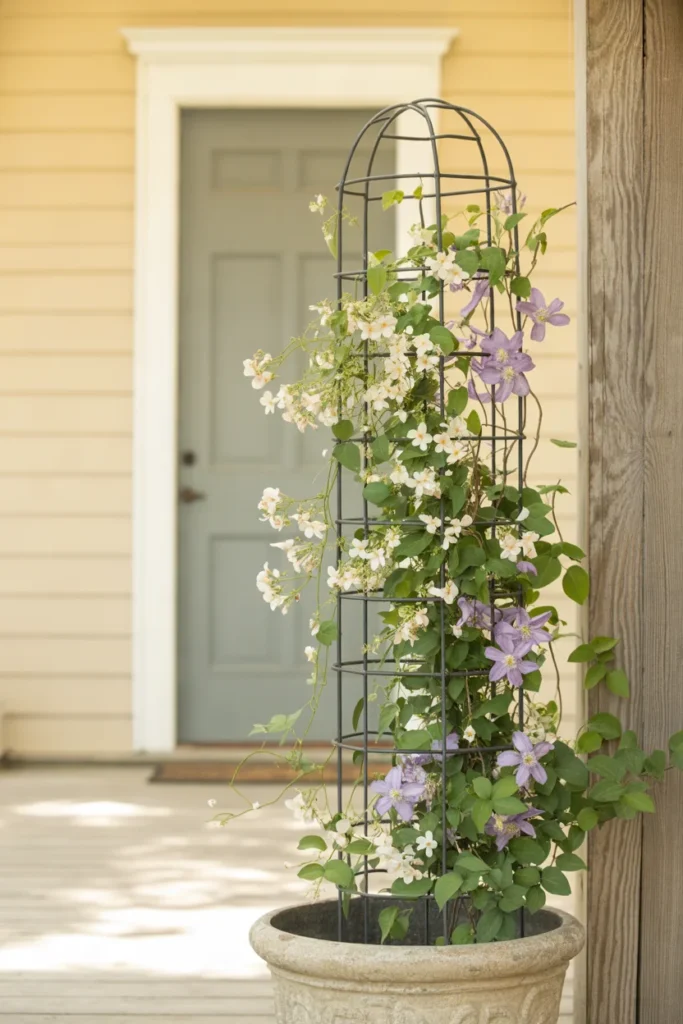
A slim trellis introduces height, greenery, and a little architectural detail beside the entrance. Painted black, it creates a defined outline against pale siding. A natural wood trellis feels softer and suits cottage or rustic exteriors. Climbing plants can gradually cover the structure, adding texture without requiring several large containers.
To create the look:
- Select a trellis that fits the available wall area and supports the mature plant.
- Choose a locally suitable climber based on sunlight, climate, and growth habits.
- Secure the trellis to an appropriate support, following the manufacturer’s installation instructions.
- Guide young growth gently and prune it to keep windows, lights, and the doorway clear.
For a budget-conscious option, use a simple freestanding trellis in a sturdy planter if the porch has enough room. Check the plant’s water needs and growth rate before buying. Keep climbing stems away from gutters, electrical fixtures, and surfaces that could be damaged by moisture or aggressive roots.
24. Keep the Porch Clean and Clutter-Free
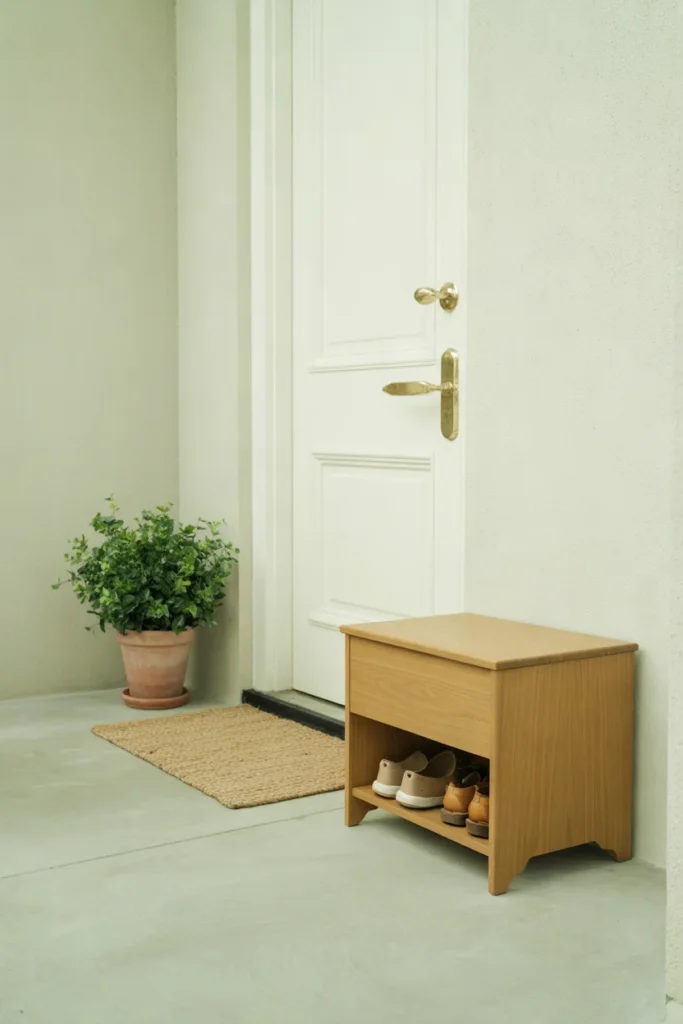
Quick Facts
- Main goal: Keep the entrance easy to use and visually calm.
- Daily essentials: A doormat, clear walking path, and necessary lighting.
- Storage options: A small weather-resistant container for lightweight outdoor accessories.
- Budget: Free to low, depending on existing storage.
- Maintenance routine: Sweep regularly, remove dead leaves, and inspect decor after bad weather.
A small porch often looks its best when every item has a clear purpose. Keep the doorway, steps, and handrails unobstructed, and limit decorative groupings to one or two focal areas. For example, a wreath and a pair of planters may provide enough detail without additional signs, baskets, and lanterns. Store seasonal accessories when they are no longer needed, and rotate a few pieces rather than displaying everything at once. A consistent cleaning routine helps affordable decor look well maintained for longer.
Helpful Decorating Tips for a Small Front Porch
Making a small entrance attractive is largely about choosing the right scale, maintaining clear pathways, and creating a consistent look. Before spending money, evaluate what already works and decide which details need attention.
- Start with cleaning. Sweep the steps, remove cobwebs, wipe the door, and clean existing fixtures before purchasing anything new.
- Choose a simple color palette. Use one main exterior color, one accent shade, and a natural tone such as wood or terracotta.
- Prioritize the doorway. A fresh door finish, attractive house numbers, and a clean doormat can make a noticeable difference without filling the porch.
- Use height strategically. Hanging baskets, wall-mounted decor, and vertical planters add interest while preserving valuable floor space.
- Measure before buying. Check the doorway width, furniture depth, and available walking clearance. Make sure doors open fully and stairs remain unobstructed.
- Layer textures carefully. Combine smooth painted surfaces with greenery, woven materials, or wood, but avoid using too many competing patterns.
- Consider your climate. Select plants and outdoor materials that suit local temperatures, rainfall, humidity, and sunlight.
- Work with what you own. Repaint an existing planter, reuse a sturdy crate, or update pillow covers instead of replacing everything.
- Plan for maintenance. Choose washable mats, weather-resistant decor, and plants you can care for consistently.
- Check rental restrictions. Use removable decor where suitable and obtain permission before drilling, painting, or changing permanent exterior features.
Conclusion
Creating a welcoming entrance does not require expensive furniture, elaborate landscaping, or a large porch. These 24 curb appeal small front porch ideas on a budget show how simple changes, from fresh door paint and colorful plants to solar lighting and organized decor, can make your home’s exterior feel more inviting. Start with the improvements that address your biggest needs, then add a few details that reflect your personal style.
Keep your measurements, available space, climate, and budget in mind as you plan. Save this article on Pinterest for inspiration, try an idea that suits your home, and share it with someone looking for affordable porch decorating ideas.
Frequently Asked Questions
1. How can I improve curb appeal on a small front porch on a budget?
Start by cleaning the steps, sweeping the porch, and removing clutter. Then focus on one or two affordable updates, such as repainting the front door, adding a new doormat, placing colorful planters near the entrance, or updating faded house numbers. Solar pathway lights can also improve the appearance of the approach. Reusing containers and decor you already own helps keep costs down while making the entrance look more intentional.
2. What should I put on a small front porch?
A small front porch usually needs only a few carefully chosen items. Consider a doormat, one seasonal wreath, a pair of compact planters, or a single chair if space permits. A lantern or wall-mounted planter can add interest without occupying much floor area. Choose accessories that complement one another, and leave enough room for the door to open fully and visitors to move safely.
3. How can I make a small front porch look bigger?
Keep the floor area as open as possible and use decor that draws the eye upward. Hanging baskets, narrow vertical planters, and wall-mounted lights provide visual interest without crowding the entrance. A coordinated color palette and matching planters can create a more orderly appearance. Avoid oversized furniture, bulky containers, and too many small decorative objects, which can make the porch feel busy.
4. What are the cheapest ways to decorate a front porch?
Cleaning and reorganizing are the least expensive places to start. After that, repaint an existing planter, make a simple wooden sign from reclaimed material, reuse a seasonal wreath, or refresh an old chair with a new outdoor cushion cover. You can also grow plants from seeds or cuttings where appropriate. Small updates often provide more value than buying several new accessories at once.
5. How can I make my front entrance look more inviting?
Keep the door and surrounding surfaces clean, ensure the house numbers are easy to see, and provide suitable lighting for evening arrivals. Add a welcoming doormat, a wreath, or healthy plants that complement the exterior. If there is room, a small bench or chair can make the entrance feel more comfortable. Most importantly, keep the steps, doorway, and walking path clear so the space feels accessible and well cared for.
